Romantic Truffle Gnocchi
Romantic Truffle Gnocchi
Choosing the Right Potatoes
For the perfect gnocchi texture, selecting the right type of potato is crucial. Starchy potatoes, such as Russets or Idaho potatoes, work best because they yield a light and fluffy gnocchi. Avoid using waxy potatoes like red or yellow varieties, as they retain too much moisture, resulting in a dense final product. Ideally, bake the potatoes rather than boil them; this technique keeps their moisture levels in check.
When preparing the potatoes, ensure they are fork-tender after baking. Depending on their size, this could take anywhere from 45 to 60 minutes at 400°F (200°C). Once they're cool enough to handle, peel the skins off gently and process them while still warm for optimal texture. If using a ricer or food mill, be careful not to overwork the potato, as this can lead to gummy gnocchi.
Making and Shaping Gnocchi
The process of making gnocchi can feel a bit daunting initially, but with practice, it becomes second nature. After mixing the potato with flour and egg, aim for a soft, slightly sticky dough. Avoid adding excess flour, as this will make your gnocchi heavier. A well-formed dough should be pliable but not overly wet. Resting the dough for about 20 minutes at room temperature helps to relax the gluten before shaping.
To shape your gnocchi, divide the dough into manageable portions. Roll each piece into long ropes, about 1/2 inch in diameter, and cut them into small pieces, roughly one inch long. For a classic texture, gently press each piece against a fork or gnocchi board to create ridges, which help capture the sauce later. Keep a light dusting of flour on your work surface to prevent sticking, but remember to keep flour usage minimal for the best final texture.
Truffle Sauces: Enhance the Flavor
The star of this dish is the truffle sauce, which elevates the simple potato gnocchi to a gourmet level. You can use truffle oil or a truffle butter to impart that rich, earthy flavor. If using truffle oil, start with a small amount — about a teaspoon — and adjust according to your taste. The oil can become overpowering, so it's best to gradually incorporate it into your sauce until it reaches the desired intensity.
For a creamy sauce, consider adding heavy cream to your truffle oil along with some grated Parmigiano-Reggiano. This combination not only adds richness but also balances the boldness of the truffle. Heat the cream gently over medium heat until it begins to steam, then add the truffle oil and cheese, stirring until it’s smooth and glossy. Toss your freshly cooked gnocchi in this sauce immediately before serving for the best texture and flavor.
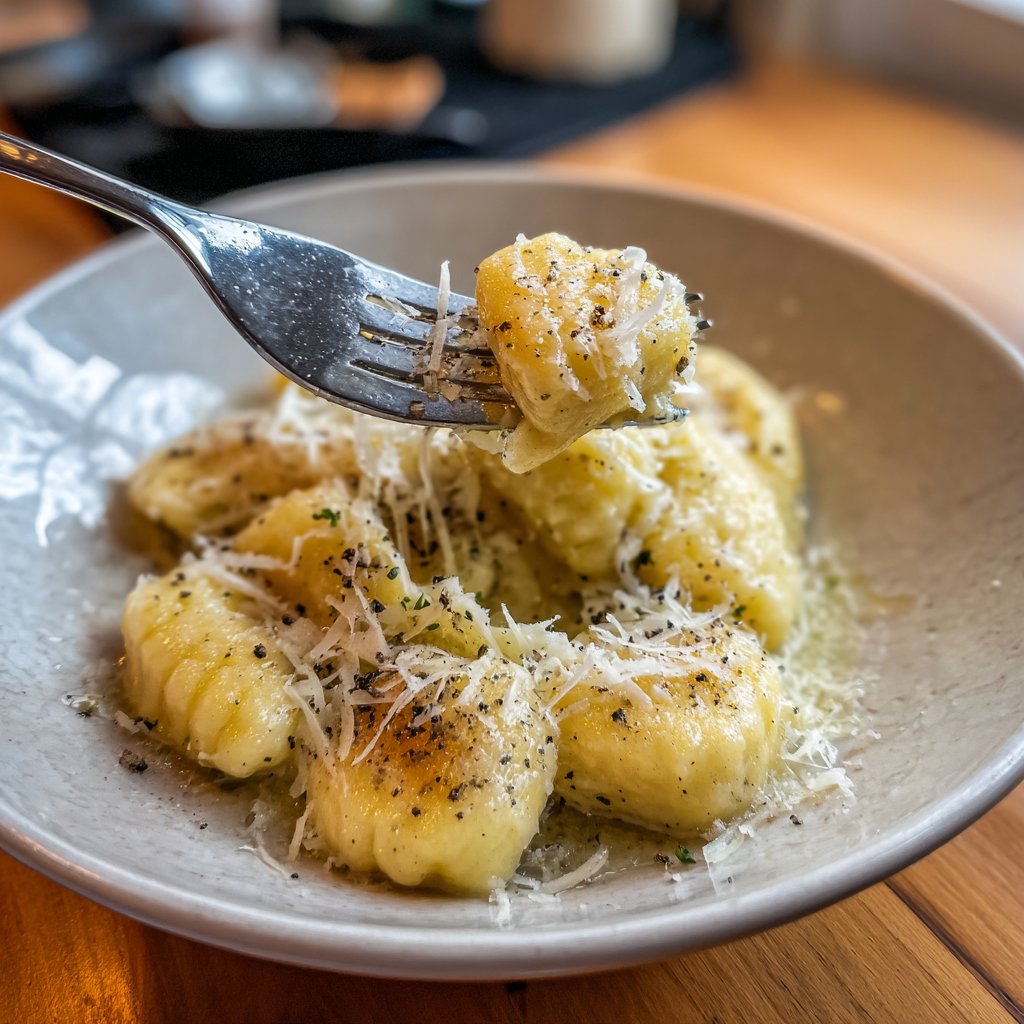
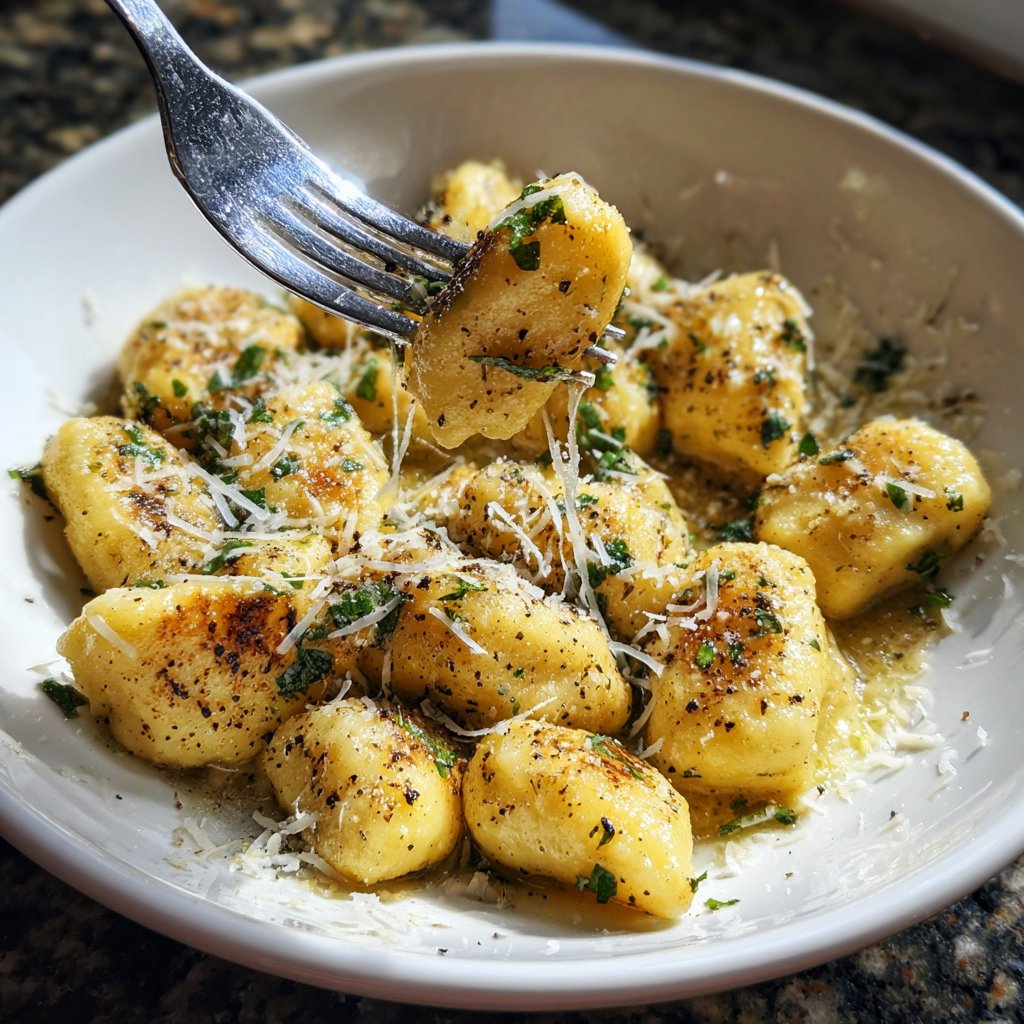
Serving Suggestions
For an elegant presentation, serve the gnocchi in a shallow bowl topped with a sprinkle of extra Parmesan and freshly cracked black pepper. A light garnish of fresh herbs, such as chives or parsley, adds a pop of color and freshness. Pairing this dish with a simple arugula salad dressed in lemon vinaigrette complements the richness of the gnocchi beautifully.
If you're hosting a romantic dinner, consider pairing the gnocchi with a nice white wine, such as a Pinot Grigio or Chardonnay, which play nicely with the truffle flavors. Make sure to serve the wine chilled and allow your guests to enjoy each sip alongside every bite.
Make-Ahead Tips
Gnocchi can be made in advance, which can be a huge time-saver for special occasions. After shaping the gnocchi, lay them out on a floured baking sheet in a single layer and freeze them until firm. Once frozen, transfer them to a zip-top bag and store them in the freezer for up to a month. This allows you to cook them straight from frozen when you're ready to enjoy your meal.
When cooking frozen gnocchi, simply adjust the boiling time, as they may require an extra minute or two in the water. You'll know they're done when they float to the surface, signaling that they're cooked through. This method ensures you always have delicious, homemade gnocchi at the ready without the last-minute rush.
Troubleshooting Common Issues
If your gnocchi turn out too dense or gummy, it's often because too much flour was added to the dough or the potatoes were overworked. To achieve the right balance, remember to add just enough flour to bring the dough together softly. If you find your dough has become too sticky, incorporate flour in small increments without overdoing it to maintain the lightness of the gnocchi.
Conversely, if the gnocchi fall apart while boiling, this usually indicates undercooking or insufficient binding. Adding an extra egg yolk can help bind the dough more effectively, ensuring they hold their shape during cooking. Testing just a few pieces before boiling the entire batch can prevent disappointment with your final dish.